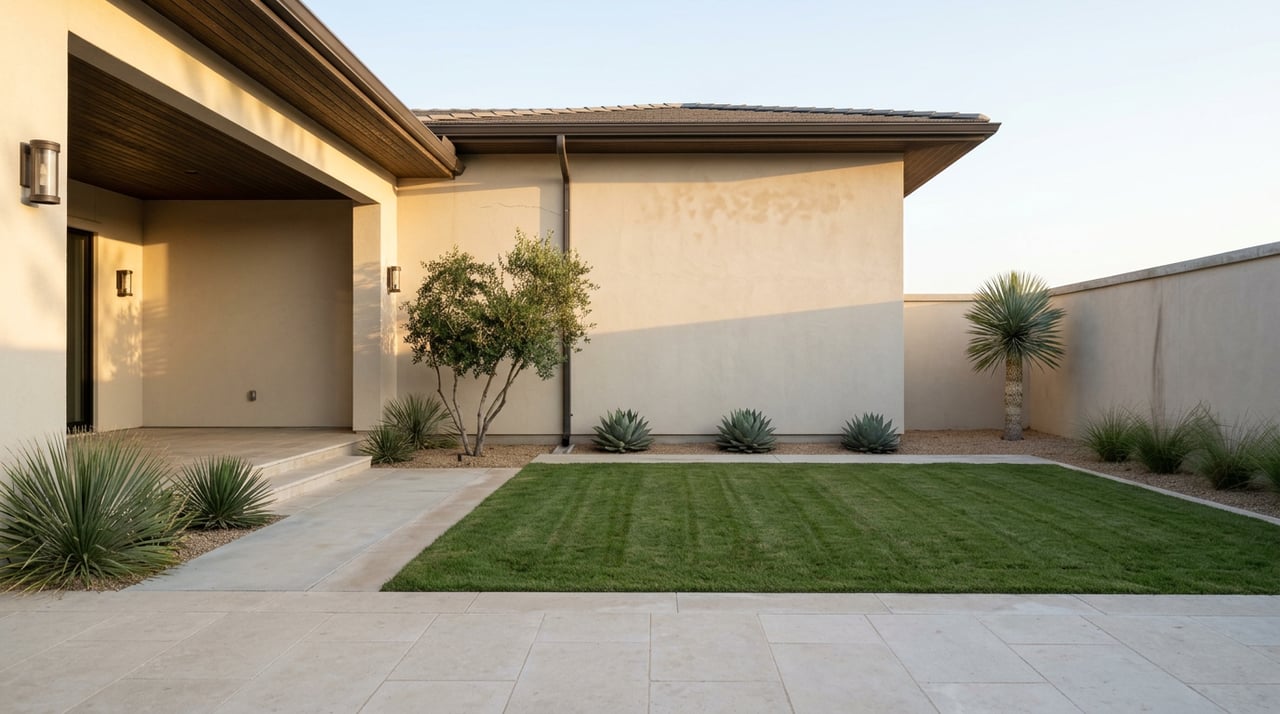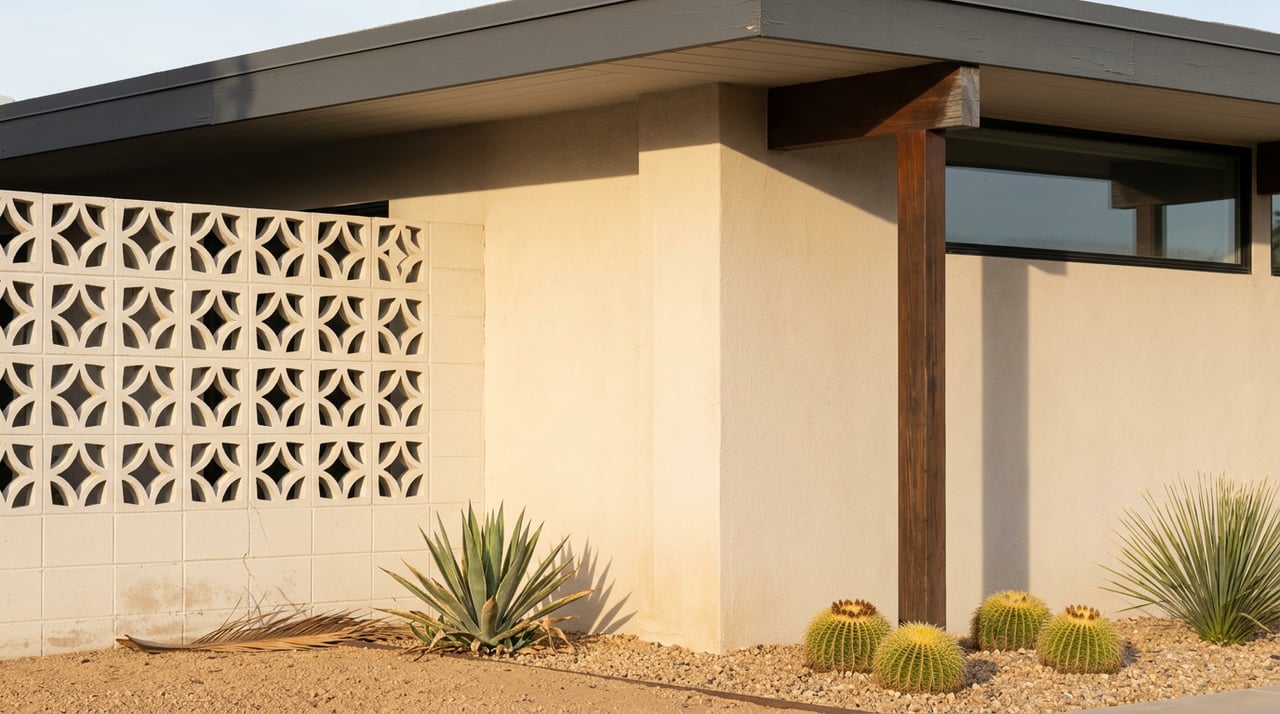
Two houses sit across the street from each other in Vista Las Palmas. Same butterfly roofline, same year, same post-and-beam bones from the Alexander Construction Company's 1958 build-out of the neighborhood. One owner wants to swap the original steel-frame windows for something more efficient. She calls a contractor, pulls a permit, and the crew starts Monday. Her neighbor across the street wants to do the exact same thing to a house that looks nearly identical from the sidewalk. He has to file for a Certificate of Appropriateness first, wait for the Historic Preservation Officer's report, and possibly sit through a public meeting of the Historic Site Preservation Board before a contractor touches a single pane.
Same architecture. Same block. Completely different rulebook. The difference is a City Council resolution, and most buyers don't find out which house they're getting until they're already deep into a renovation budget.
The plaque is a contract, not a description
Palm Springs sorts older buildings into four categories, and only two of them come with real teeth. A Class 1 historic resource is designated by City Council resolution as having historic, architectural, archaeological, cultural, or aesthetic significance. Class 2 covers properties that don't quite clear the Class 1 bar but are still recognized by resolution as worth protecting. Class 3 and Class 4 are different animals entirely. They're buildings a city survey has flagged as eligible for designation, or buildings simply old enough to qualify by age, but neither has gone through the City Council process that actually locks in the rules.
That distinction matters because Palm Springs municipal code requires a Certificate of Appropriateness before any demolition or alteration of a Class 1 or Class 2 resource, or of a contributing structure inside one of the city's designated historic districts. No Certificate of Appropriateness means no building, zoning, or development permit for the work. That requirement doesn't exist for Class 3 or Class 4 properties. They can look every bit as historic as their designated neighbors and still carry none of the review.
The ordinance does carve out a few things that never need that sign-off: interior work, repainting in a color that matches the original or doesn't disturb the character-defining features, and sign changes that already fit an approved sign program. Everything else, from a rebuilt kitchen wing to a swapped roofline to new glazing, goes through the Historic Preservation Officer first, who prepares a report before the Historic Site Preservation Board weighs in.
The tax break nobody explains before escrow
Here's the part that changes the math for buyers. Class 1 and Class 2 resources, along with contributing structures in a historic district, are the properties eligible for a Mills Act contract, the state program that lets owners funnel property tax savings back into restoration and maintenance. Reported figures put the reduction at 50 to 60 percent off the property tax bill for a qualifying historic home. Class 3 and Class 4 properties don't qualify at all.
That's the actual trade a buyer is making when they pursue Class 1 status on a house they already love: give up the ability to change the exterior on your own schedule, in exchange for a materially lower tax bill for as long as you own it. The city is currently accepting Mills Act contract applications through an updated online portal, which tells you the program is active and current owners are still using it, not a relic buyers only read about in old blog posts.
None of this is automatic. Getting a Class 1 designation starts with a pre-application conference with the city's Historic Preservation Officer, who researches the property's history and architectural significance before the Historic Site Preservation Board or City Council ever get involved. Not every old home clears that bar, and not every owner wants the process. A home in Deepwell Estates tied to architect E. Stewart Williams and a 1948 Little Tuscany property rebuilt by William Cody in 1965 have both moved through this pipeline recently, proof that designation is a live, ongoing conversation in this market, not a fixed list from decades ago.
| Class | How it's created | Certificate of Appropriateness required? | Mills Act eligible? |
|---|---|---|---|
| Class 1 | City Council resolution | Yes | Yes |
| Class 2 | City Council resolution | Yes | Yes, if the resource still exists |
| Class 3 | Identified in a city survey, not formally designated | No | No |
| Class 4 | Built before January 1, 1978, or age undetermined | No | No |
Attribution is not the same thing as designation
Vista Las Palmas is a good place to see how loosely the language gets used. The Alexander Construction Company built roughly 330 homes there starting in 1958. The firm of Palmer and Krisel designed half of them, and architect Charles Du Bois designed the other half across six different plans, which is why the neighborhood mixes William Krisel's butterfly and folded-plate rooflines with Du Bois's angular "Swiss Miss" A-frames on the same streets. Robert and Helene Alexander themselves lived in a custom Palmer and Krisel design at 1350 Ladera known as the House of Tomorrow, a house that later hosted Elvis and Priscilla Presley's 1968 honeymoon and drew a roster of residents that included Marilyn Monroe, Dean Martin, and Dinah Shore.
That pedigree is real, and it's part of why these neighborhoods command what they do. But a listing that says "Krisel-attributed" is describing architectural history, not legal status. A home can be widely and correctly attributed to a specific architect without ever having gone through the City Council resolution that makes it a Class 1 or Class 2 resource. Before a buyer plans a renovation around what they think the rules allow, the attribution and the designation status need to be confirmed separately, through city records and the Historic Preservation Officer, not assumed from a listing description or a neighborhood's reputation.
The same gap shows up in ownership structure. Old Las Palmas runs largely without a homeowners association, governed instead by individual CC&Rs on each lot. Vista Las Palmas has an HOA. The Movie Colony varies tract by tract. None of that tells a buyer whether a specific house is Class 1, Class 2, or unlisted. Only the city's own historic properties records answer that question.
What this looks like on the ground
Twin Palms, Racquet Club Estates, Old Las Palmas, the Movie Colony, and Vista Las Palmas each carry their own mix of designated and undesignated homes, sometimes on the same block. A buyer touring five houses in an afternoon could be looking at five different combinations of exterior review requirements and tax treatment, and nothing about the curb appeal will tell them which is which. The only way to know before writing an offer is to pull the property's actual historic resource status and, if a renovation is part of the plan, book that pre-application conference with the Historic Preservation Officer early enough to shape the offer itself.
FAQ
Does every older home in these neighborhoods carry Certificate of Appropriateness requirements? No. Only Class 1 and Class 2 resources, and contributing structures inside a designated historic district, require that sign-off before exterior work or demolition. Class 3 and Class 4 properties, identified as eligible or simply old enough to qualify, carry no such requirement and are not eligible for the Mills Act.
What can I change on a Class 1 home without city approval? Interior modifications, repainting in a color that matches the original or doesn't disturb the character-defining features, and signage changes consistent with an already-approved sign program.
Does an architect attribution on a listing mean the house is formally designated? Not necessarily. A home can be correctly attributed to Krisel, Du Bois, or another architect through historic record without ever having received a City Council resolution designating it Class 1 or Class 2. The two facts need to be confirmed separately before a renovation budget gets built around either assumption.
Buying into one of these neighborhoods means buying into a specific set of rules that don't announce themselves on a for-sale sign. If you're weighing a property in Twin Palms, Vista Las Palmas, Old Las Palmas, Racquet Club Estates, or the Movie Colony and want to know exactly what you'd be signing up for before you write an offer, Lori Ebeling can walk the designation status, the renovation math, and the Mills Act numbers with you. Schedule a 15-minute consultation before you fall for a roofline you can't touch without a permit.