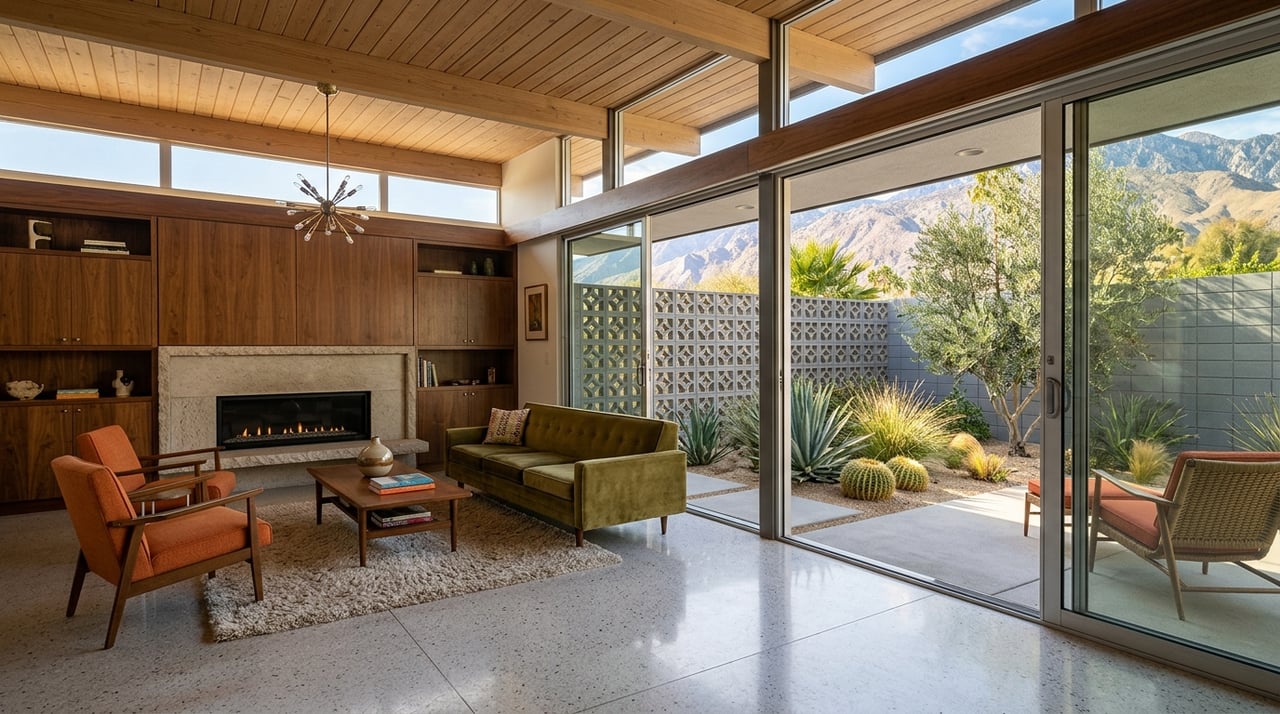
If you own a Palm Springs mid-century home, you already know it is not just another house on the market. In this city, architecture carries real weight, and buyers often respond to design integrity, original character, and how well a home fits Palm Springs' modernist identity. If you are thinking about selling, the right pricing and presentation strategy can help you protect that value and attract serious interest. Let’s dive in.
Why Palm Springs Mid-Century Homes Stand Apart
Palm Springs is an architecture-driven market. The City of Palm Springs identifies high-quality architecture as a hallmark of the city, and midcentury modern design remains a visible part of its identity and preservation story.
That matters when you price a home. Many buyers are not only comparing bedroom count or square footage. They are also evaluating architectural credibility, condition, originality, and whether the home feels true to its period while still working for modern living.
Palm Springs also has a large share of postwar housing stock that falls within the city's historic survey framework through 1969. That gives many mid-century homes a different market context than a standard resale property in a typical suburban setting.
What the Current Palm Springs Market Suggests
Recent market data points to a market with demand, but also more room for negotiation than in the peak frenzy years. In March 2026, GPSR reported 769 active listings in Palm Springs, a 43-day median selling time, and a 5.7-month valley sales ratio.
GPSR also reported a model-based price of $1,103,493 for the average-size detached Palm Springs home and $432,910 for the average-size attached home. Zillow reported an average Palm Springs home value of $630,706 as of April 30, 2026, down 2.2% year over year, with homes going pending in about 39 days.
These numbers are not directly interchangeable because they measure different things. Still, together they show a market with meaningful price dispersion, which is especially important for mid-century homes because standout design and presentation can separate one property from the next.
How to Price a Mid-Century Home
Start With Architecture, Not Just Comps
A Palm Springs mid-century home should not be priced like a generic desert property. While comparable sales still matter, they need to be filtered through the lens of design, rarity, layout, condition, and architectural integrity.
In practical terms, buyers may pay more for a home that feels like an authentic architectural product rather than a heavily altered remodel. The city's own historic evaluations note that intact mid-century modern homes help define Palm Springs' reputation as a center of modern architecture.
Design Integrity Can Support Value
Research on housing and historic districts suggests that quality and distinct design can be reflected in pricing. At the same time, any premium is market-specific, not automatic.
That is an important distinction for sellers. Original clerestory windows, strong rooflines, preserved interior volumes, and a layout that still reads true to the home's era may support value, but only when buyers can see and trust that quality.
Condition and Updates Still Matter
Even the most iconic design needs to function well. Buyers tend to respond best when a mid-century home keeps its defining features while offering updated systems, kitchens, baths, and outdoor living that support modern use.
The strongest presentation usually comes from a balanced approach. You want improvements that make the home more comfortable and marketable without stripping away the details that give it its identity.
What Buyers Notice Most
Originality Versus Generic Remodeling
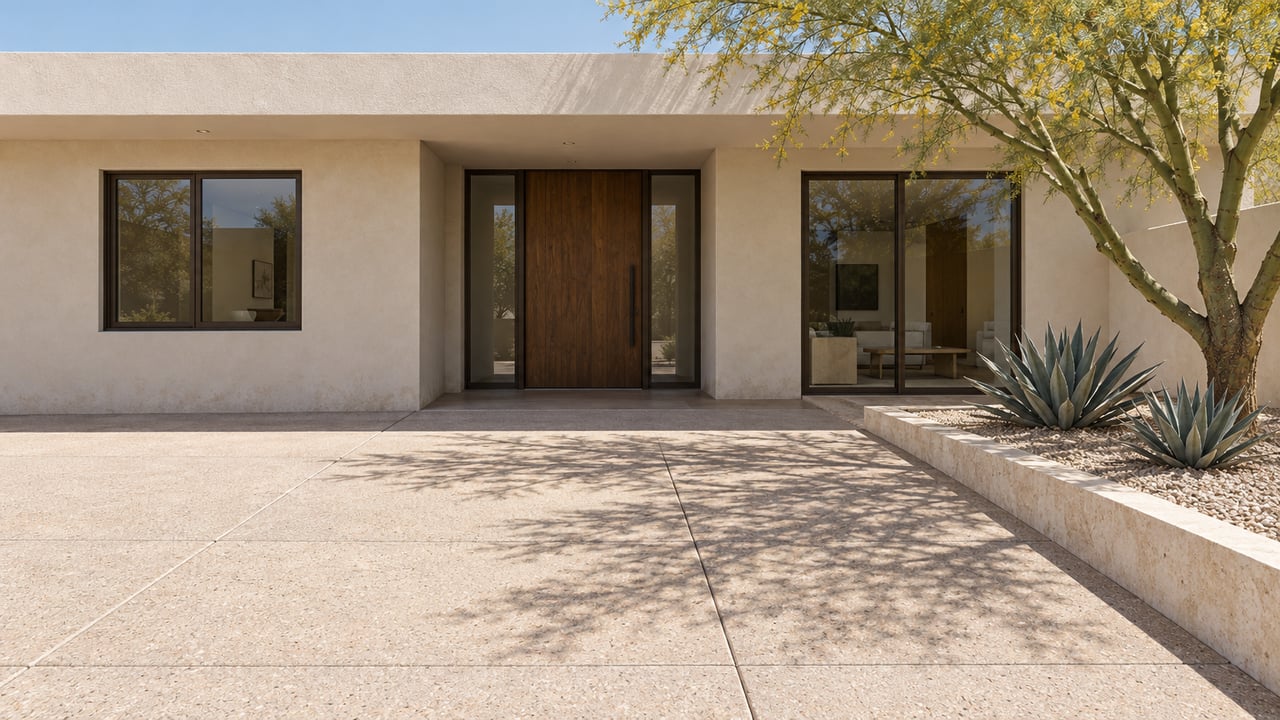
One of the fastest ways to weaken a Palm Springs mid-century home's market position is to make it feel generic. If the home has been renovated in a way that flattens its character, buyers may stop seeing it as a special architectural offering.
By contrast, homes that preserve their original footprint and defining features often align better with what design-minded buyers expect in Palm Springs. Modernism Week's featured-home descriptions reflect that same preference for restored homes that add comfort without losing form.
Indoor-Outdoor Flow
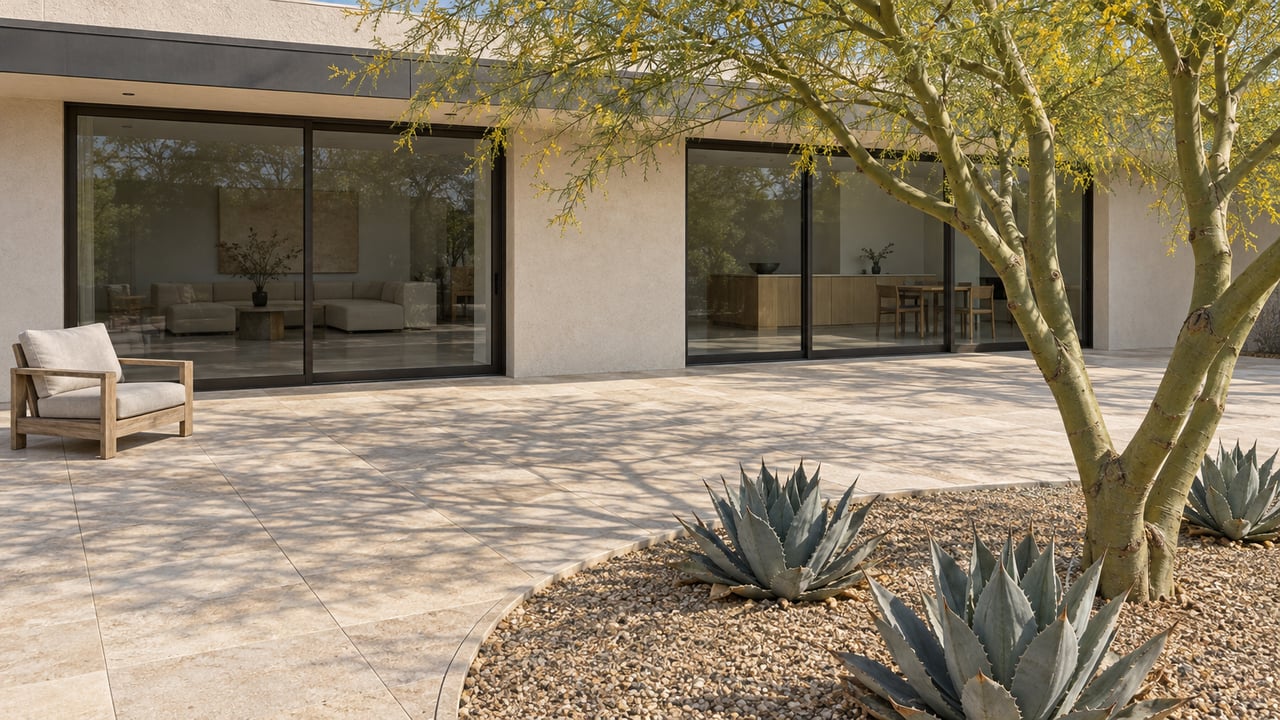
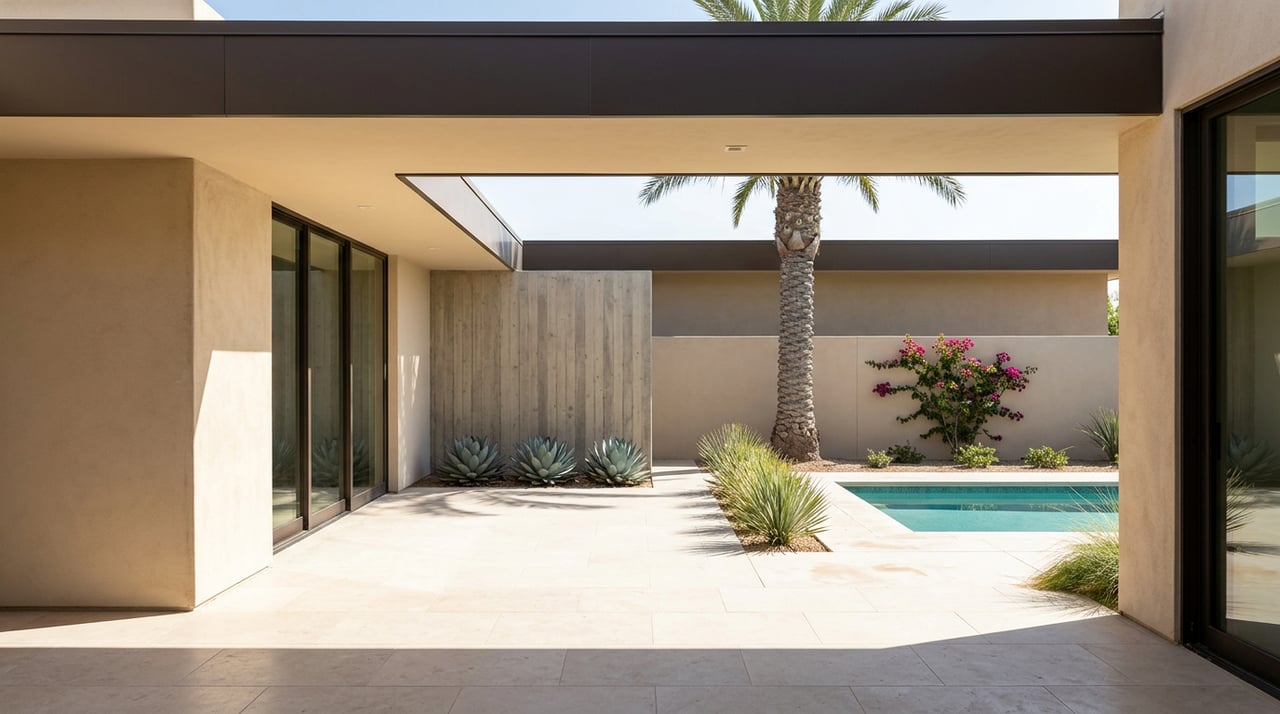
Palm Springs architecture is closely tied to the desert environment. Buyers often respond strongly to homes that celebrate that relationship through patios, pool areas, glazing, mountain views, and a clean connection between inside and outside.
When pricing and presenting the home, these spaces deserve real attention. Outdoor areas are not secondary in this market. They are often part of the home's architectural story.
Documentation and Permit History
Serious buyers often want clarity before they commit. If you can document permit history for systems, windows, additions, and exterior changes, you strengthen buyer confidence and reduce uncertainty.
That is especially useful when you are marketing updates while also claiming architectural integrity. Clear records can help support both your pricing strategy and the buyer's comfort level.
How Historic Status Affects Pricing
Verify the Home's Status Early
Before listing, it is smart to confirm whether the property is historic, potentially eligible, or located within a designated historic district. Palm Springs classifies historic resources in several ways, and that status can shape how buyers view both value and future options.
This is not just a box to check. Historic context can influence pricing, marketing language, and the kinds of questions buyers ask during the sale process.
Know When Review May Apply
The city states that demolition, major alteration, and new construction in historic districts must be reviewed before permits are issued. Palm Springs also notes that architectural review applies to all properties within a historic district because even non-contributing homes can affect the broader setting.
For sellers, this means transparency matters. For buyers, it means future plans for exterior changes should be verified early, not assumed.
Understand Mills Act Potential Carefully
The California Office of Historic Preservation describes the Mills Act as the state's key economic incentive for restoring qualified historic buildings through property-tax relief. In Palm Springs, non-contributing sites in a historic district do not qualify for Mills Act property-tax relief.
That makes classification important. If a home may have Mills Act potential, that can be relevant to a buyer, but it should be confirmed carefully and never assumed.
How to Present a Mid-Century Home Well
Reveal the Architecture
The goal of staging a Palm Springs mid-century home is not to create a theme. It is to reveal the architecture.
That means clean lines, open sightlines, restrained styling, and furnishings that help buyers notice the home's form, light, materials, and layout. Too much nostalgia or overly themed décor can distract from the architecture instead of supporting it.
Focus on the Right Rooms
According to NAR's 2025 staging report, living rooms, primary bedrooms, and kitchens were the most important rooms to stage. Agents also most often recommended decluttering, cleaning, and improving curb appeal.
For Palm Springs sellers, those basics matter even more because mid-century homes often rely on visual clarity. When surfaces are clean and rooms are edited well, the home's lines and proportions become easier to appreciate.
Keep the Tone Authentic
Palm Springs' design identity is tied to modern architecture that fits the desert environment. The most effective visual presentation reflects that with a restrained, contemporary tone rather than a heavy-handed retro approach.
You want the home to feel livable, polished, and current. The architecture should be the star, with styling that supports it quietly.
Photography Can Change First Impressions
Lead With the Strongest Image
Most buyers begin online, and listing photos carry enormous weight. NAR reports that 52% of buyers found the home they purchased online, and 81% rated listing photos as the most useful feature during their search.
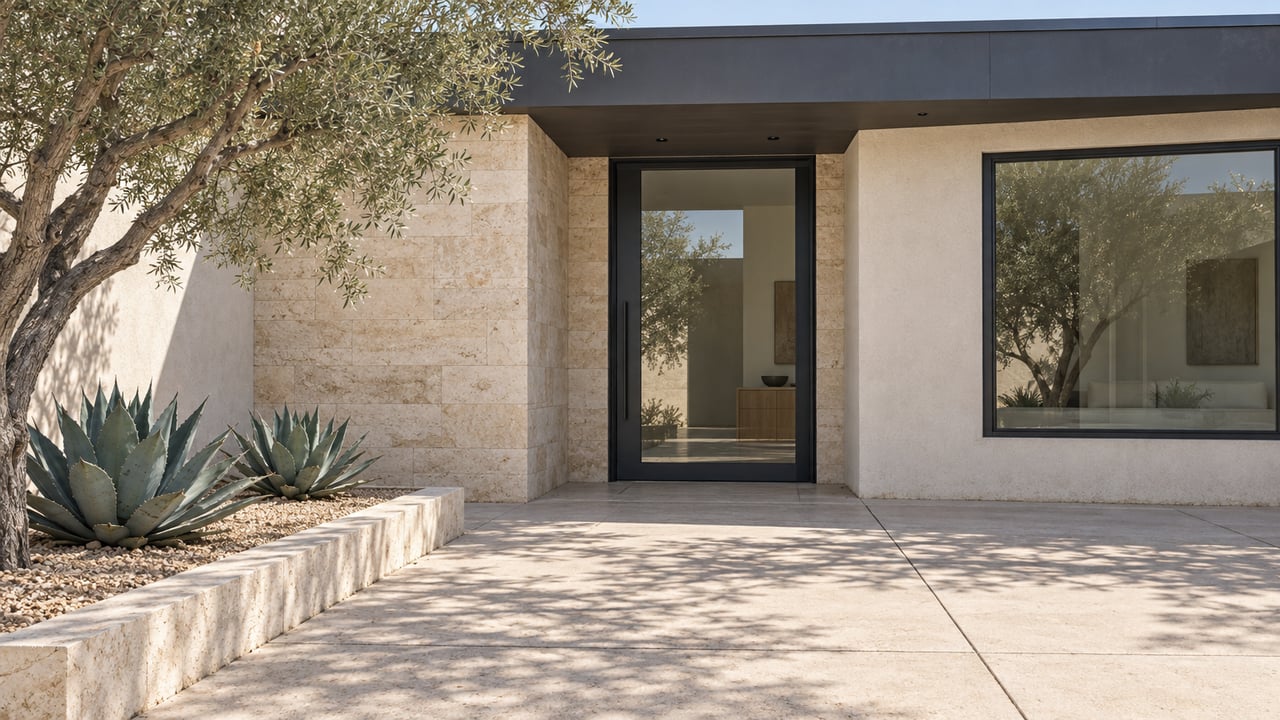
That means the lead image matters. For a Palm Springs mid-century listing, the opening photo should usually showcase the home's strongest architectural element, often a striking exterior, pool scene, or a signature view that immediately communicates design value.
Build the Photo Order Strategically
The first few days online are especially important. A strong photo sequence should quickly move from the best exterior or lifestyle image into the home's strongest interior and outdoor spaces.
This is where many listings either build momentum or lose it. If buyers do not see the architectural story right away, they may scroll past before they ever understand what makes the home special.
A Smart Selling Strategy Is Hands-On
Palm Springs mid-century homes often need more than standard pricing and a sign in the yard. They benefit from a guided process that blends market knowledge, design sensitivity, staging coordination, photography planning, and clear transaction management.
That is especially true in a market where distinctive homes compete on nuance. The right strategy helps you avoid underpricing an architecturally significant property, overpricing a home with compromised integrity, or presenting a great house in a way that fails to connect with the right buyer.
If you are preparing to sell a mid-century home in Palm Springs, a tailored plan can make a measurable difference in both buyer response and negotiating strength. With local knowledge, premium marketing, and hands-on support, you can position your home to stand out for the reasons that matter most.
If you want thoughtful guidance on pricing, presentation, and marketing for your Palm Springs home, connect with Lori Ebeling for a tailored strategy built around your property's architecture, condition, and market position.
FAQs
How should you price a Palm Springs mid-century home?
- You should start with comparable sales, then adjust for design integrity, originality, condition, rarity, and how well the home reflects Palm Springs' architectural market identity.
What presentation works best for a Palm Springs mid-century home?
- The strongest presentation is usually clean, restrained, and architecture-focused, with decluttering, careful staging, strong curb appeal, and styling that supports the home's original design rather than overpowering it.
Does historic designation affect a Palm Springs home sale?
- It can, because historic status or district location may influence buyer interest, future exterior changes, architectural review, and possible Mills Act eligibility depending on the property's classification.
What should you verify before listing a Palm Springs historic or mid-century home?
- You should verify whether the home is historic or in a historic district, whether planned exterior work may trigger city review, whether the property is a contributing site, and whether permit history is available for major updates or changes.
Why are listing photos so important for Palm Springs mid-century homes?
- Listing photos matter because most buyers begin online, and a strong lead image plus a smart photo sequence can quickly communicate the home's design value, layout, and indoor-outdoor appeal.
Should you renovate a Palm Springs mid-century home before selling?
- It depends on the home, but the market often responds best to updates that improve comfort and function while preserving defining materials, spaces, and architectural character.